Kelsey Pulse
KELSEY-SEYBOLD
THE PULSE
An end-to-end intranet redesign for a healthcare system serving 3,000+ employees and 480 physicians across 25 locations — from MoSCoW analysis through 9 content iterations to a final clickable prototype that put critical clinical apps above the fold for the first time.
3,000+ employees.
One source of truth.
The Pulse is Kelsey-Seybold’s intranet site used by over 3,000 administrators, nurses, technicians, and 480 physicians across 25 locations. Everything from HR forms to special events, payroll information, and physician resources lives here. The organization needed a complete redesign: greater visual appeal, dramatically improved ease of use, and critical clinical web apps moved above the fold where they belong.
Lead Designer & Client Liaison.
I worked directly with the HR client to organize and prioritize the initial project scope and develop requirements. In addition to being the liaison between client and team, I served as lead designer alongside developers and SharePoint architects — concepting wireframes, designing mockups and clickable prototypes, and creating spec sheets for developer handoff.
The Problem to Solve
- Outdated page formats that no longer matched the updated Kelsey-Seybold brand
- Excessive links creating cognitive overload and navigation friction for medical staff
- Critical clinical web apps displayed below the fold — requiring scrolling to reach tools needed immediately on shift
- No visual hierarchy distinguishing urgent resources from general content
- All solutions constrained to IE9 browser specifications — the organization’s default
- SharePoint architecture required design decisions to be pre-validated with developers before concept phase
The site that needed
to change.
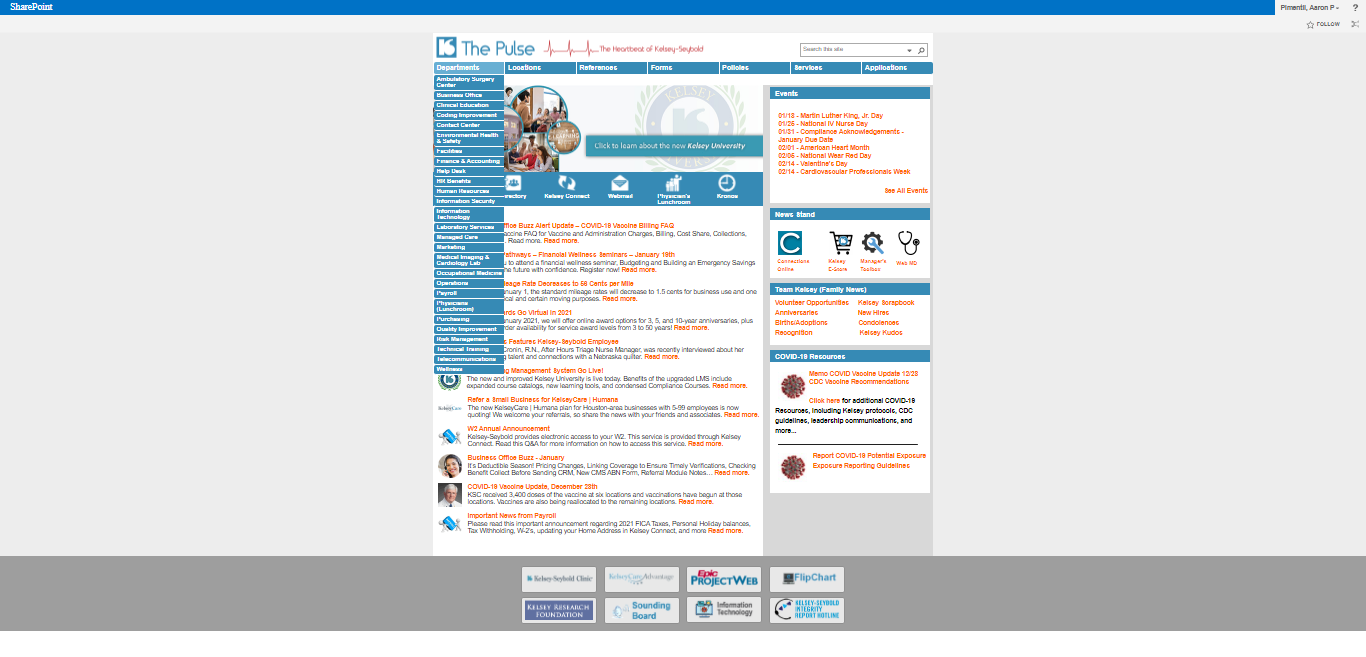
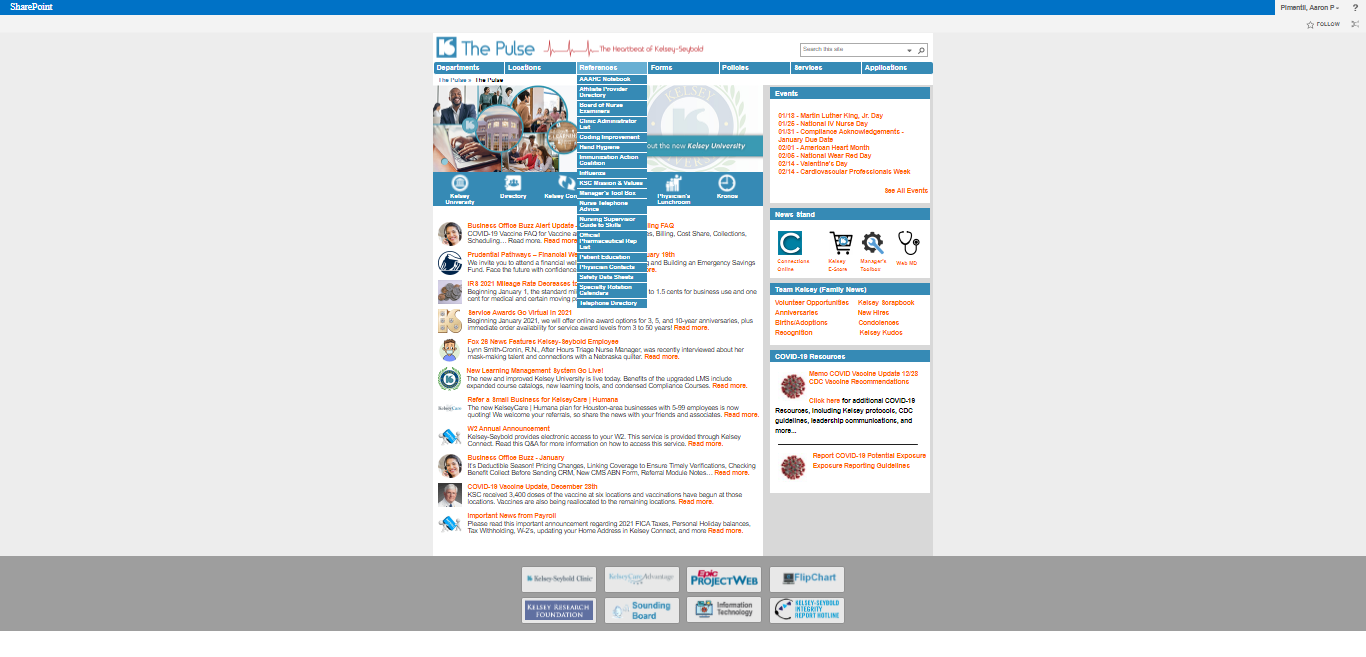
Before the redesign, The Pulse suffered from visual inconsistency, cluttered navigation, and a layout that buried the most important tools employees needed daily. These screenshots document the state of the intranet at project kickoff.


From wish list to
working prototype.
MoSCoW Analysis
The kickoff meeting began with an initial wish list document from HR. This document was assessed using the MoSCoW Analysis method to determine which features would be built, in what priority order. Immediately following, the client requested low-fi concepts to see how the requirements would be interpreted visually. All SharePoint feasibility was pre-validated with the development team before design began.
Research & Concept Exploration
I researched high-volume information sites and expanding market trends advantageous to the design. After the research phase, I developed several wireframe directions as potential solutions — pulled from a myriad of sources and discussed with the development team prior to design to ensure SharePoint would support the intended look, feel, and functionality.
9 Iterations & User Testing
After nine content variations, dozens of email communications, 3 months of design refinement, and multiple rounds of user testing from the HR department, Option 4 was selected. The client was excited with the clean, accessible style — and more importantly, medical professionals now had immediate access to their web apps above the fold in the navigation bar.
High-Fidelity Prototype & Spec Sheets
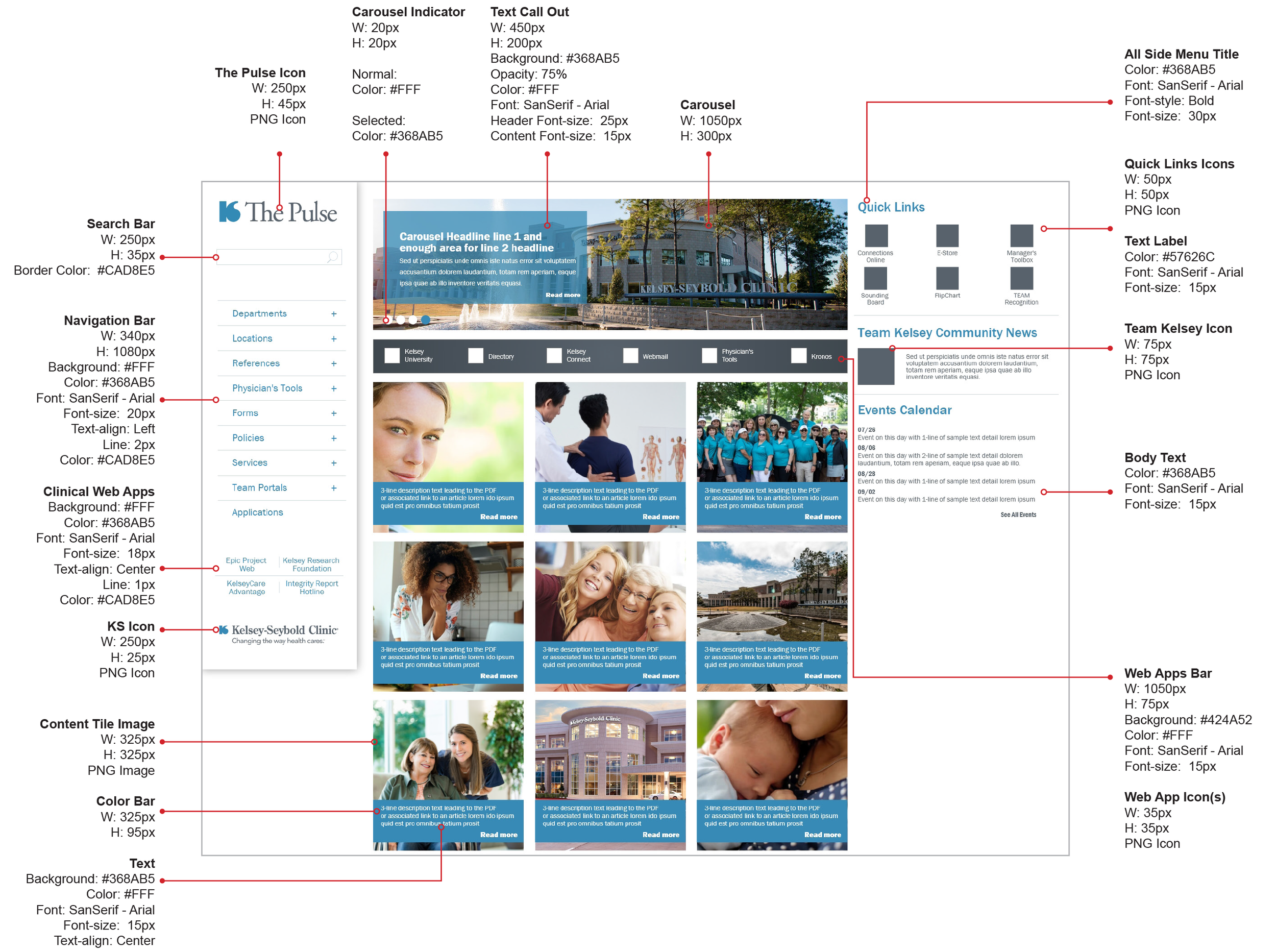
The final design was translated into a fully clickable Adobe XD prototype for stakeholder review and user validation. Complete spec sheet documentation was produced for developer handoff — covering layout, color, typography, component behavior, and interactive states across the full SharePoint implementation.
Four directions.
One chosen.
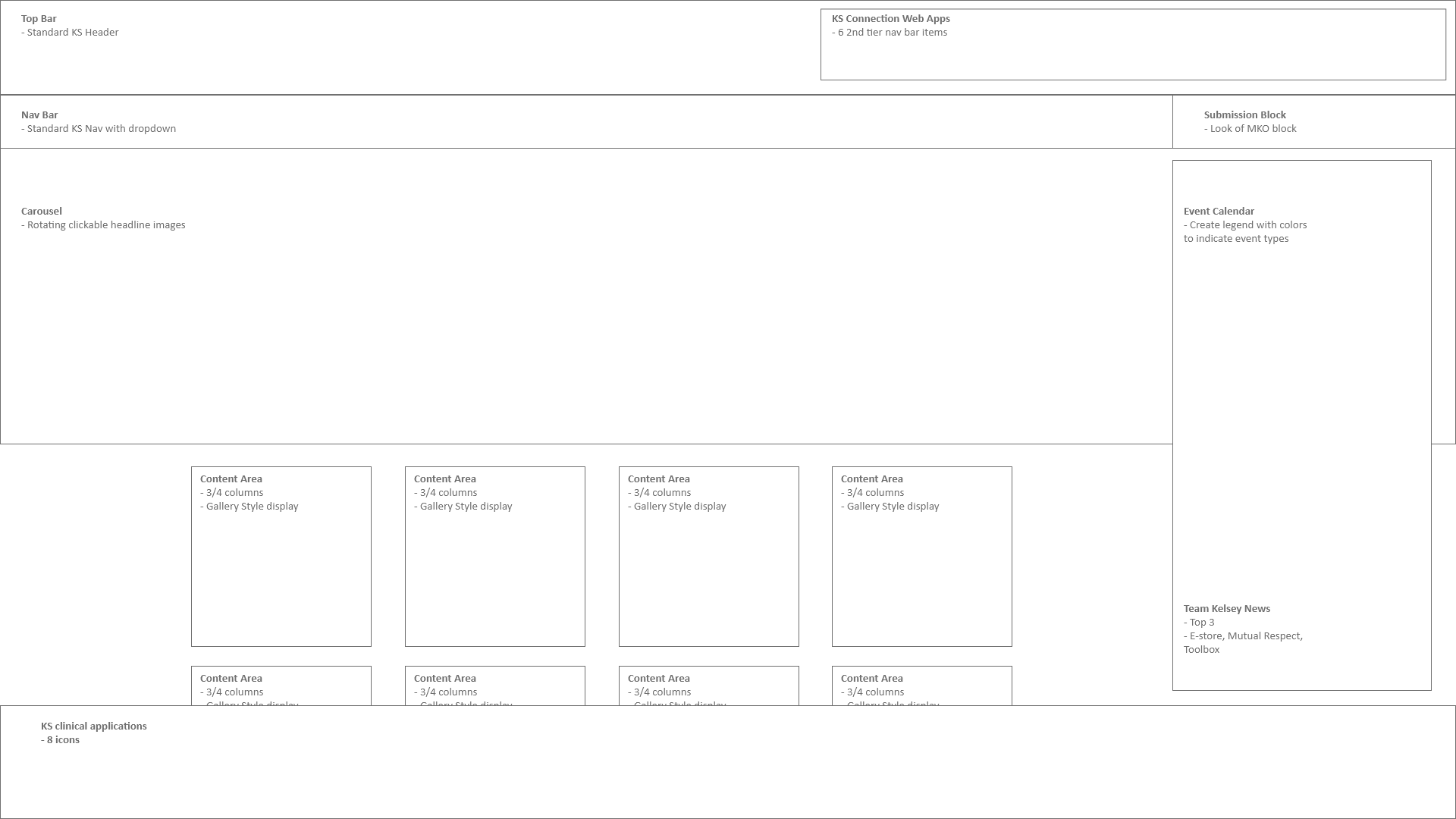
These first concepts were derived from researching existing dashboard trends, reviewing competitor websites for useful functionality, and maintaining Kelsey-Seybold brand standards. Each explored a different approach to information hierarchy and navigation architecture.


The selected design —
all states.
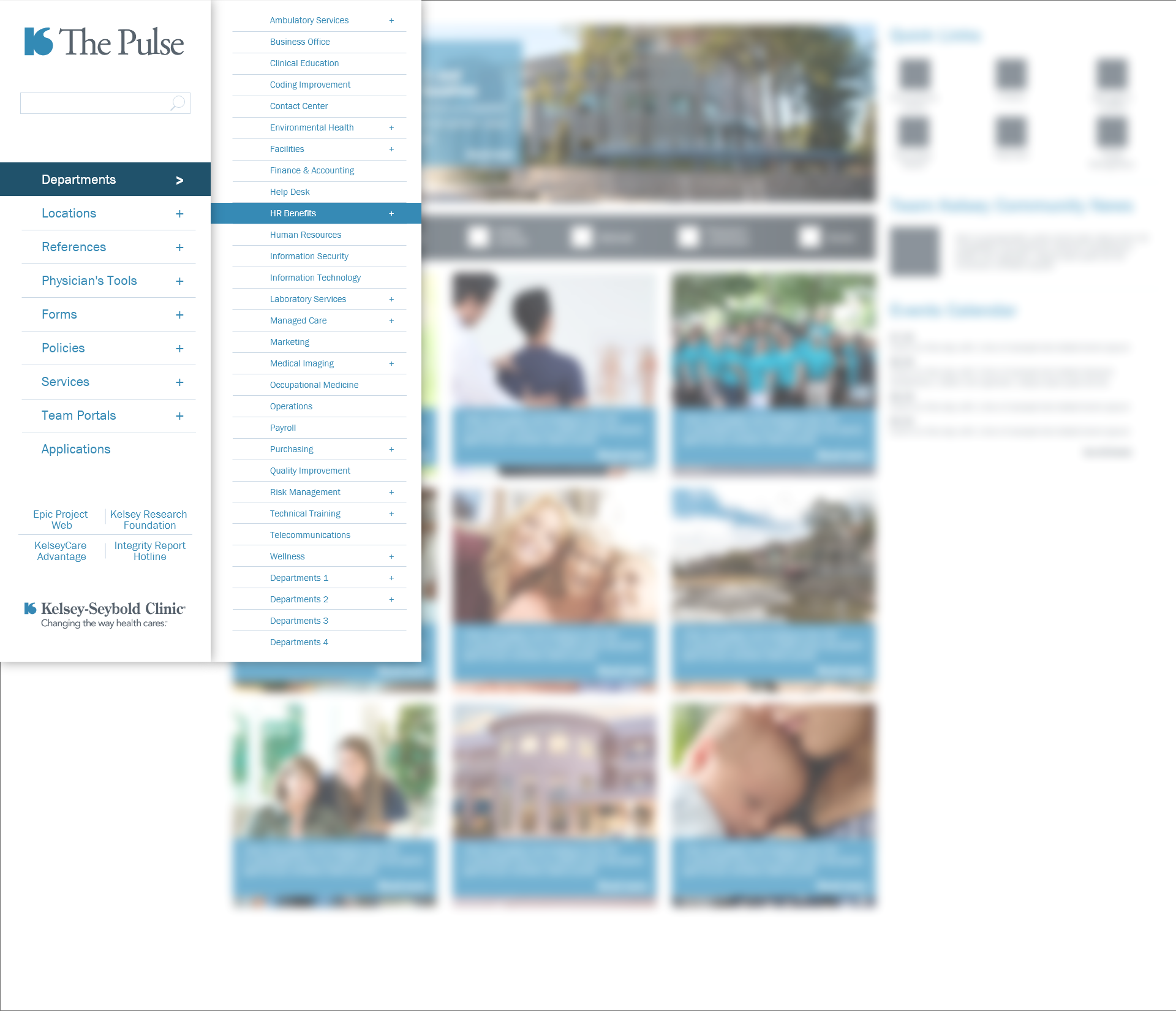
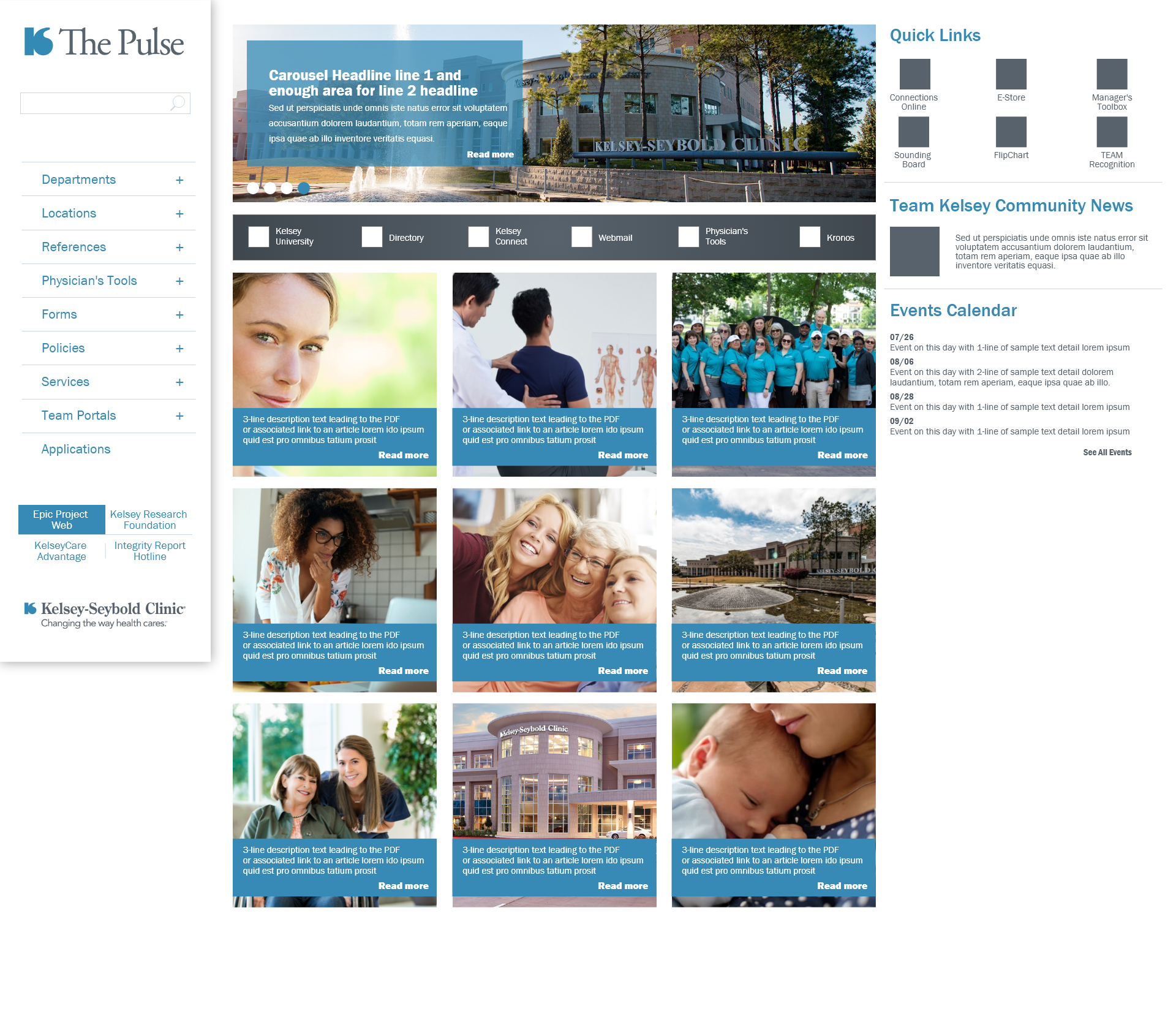
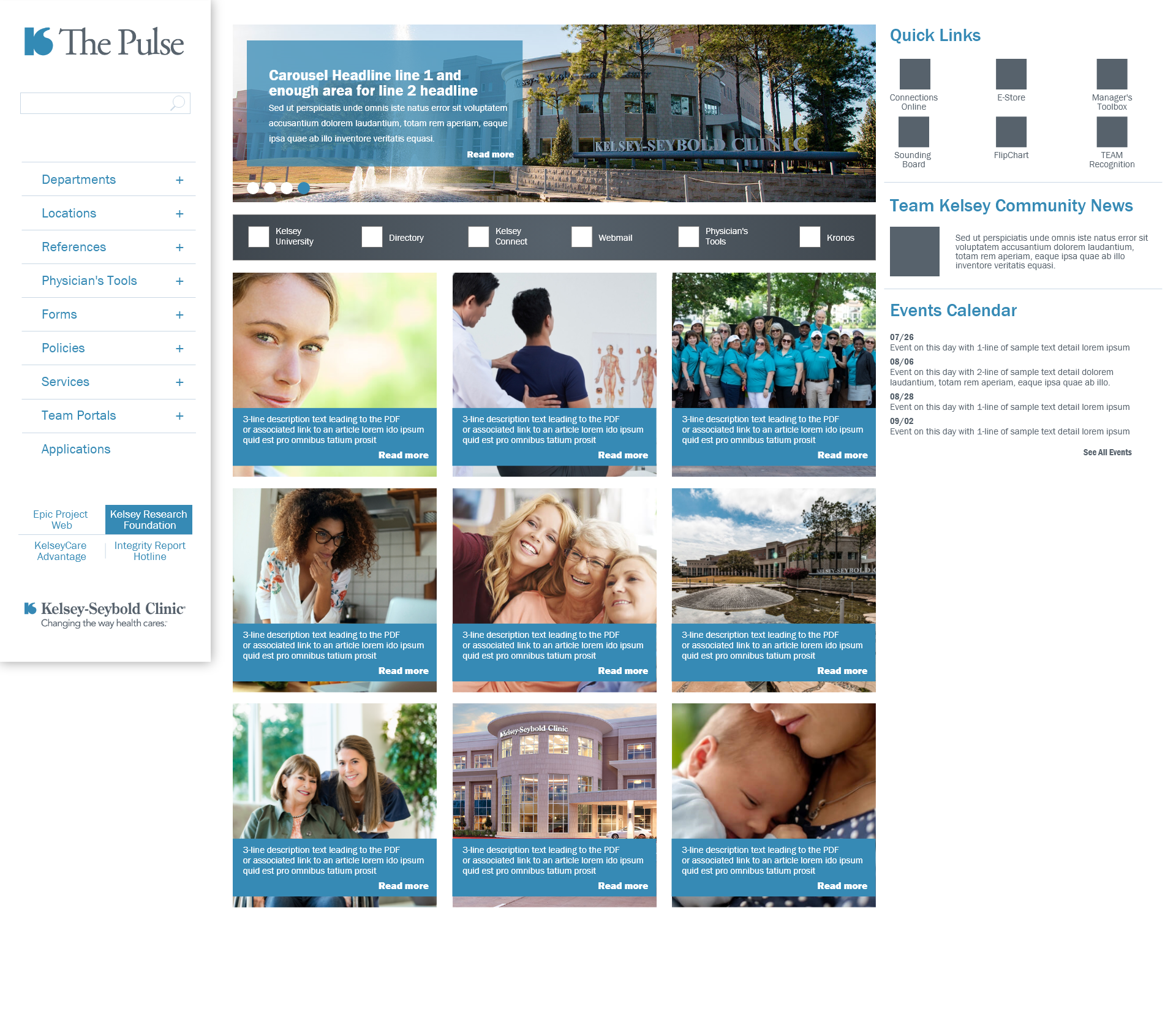
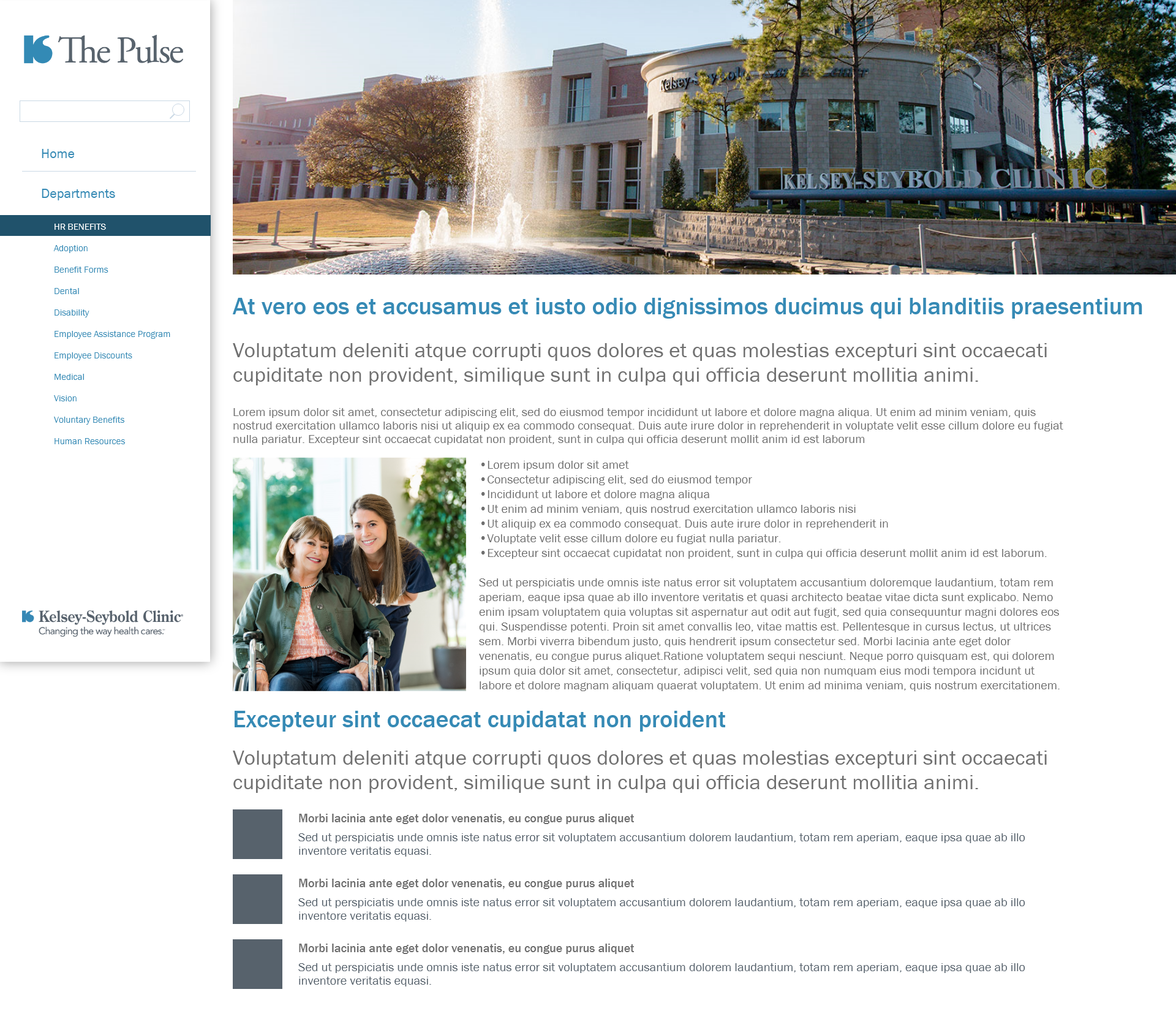
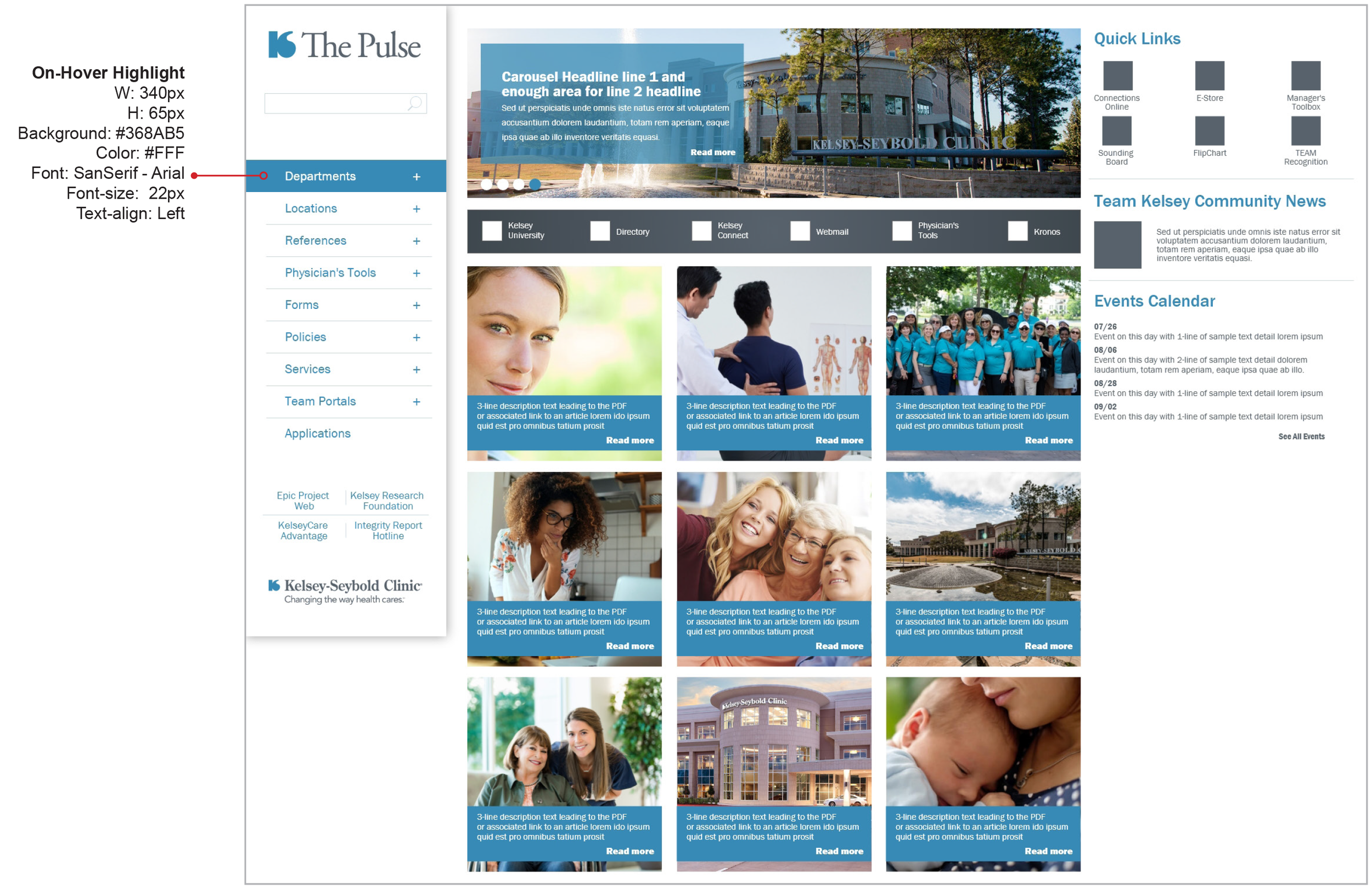
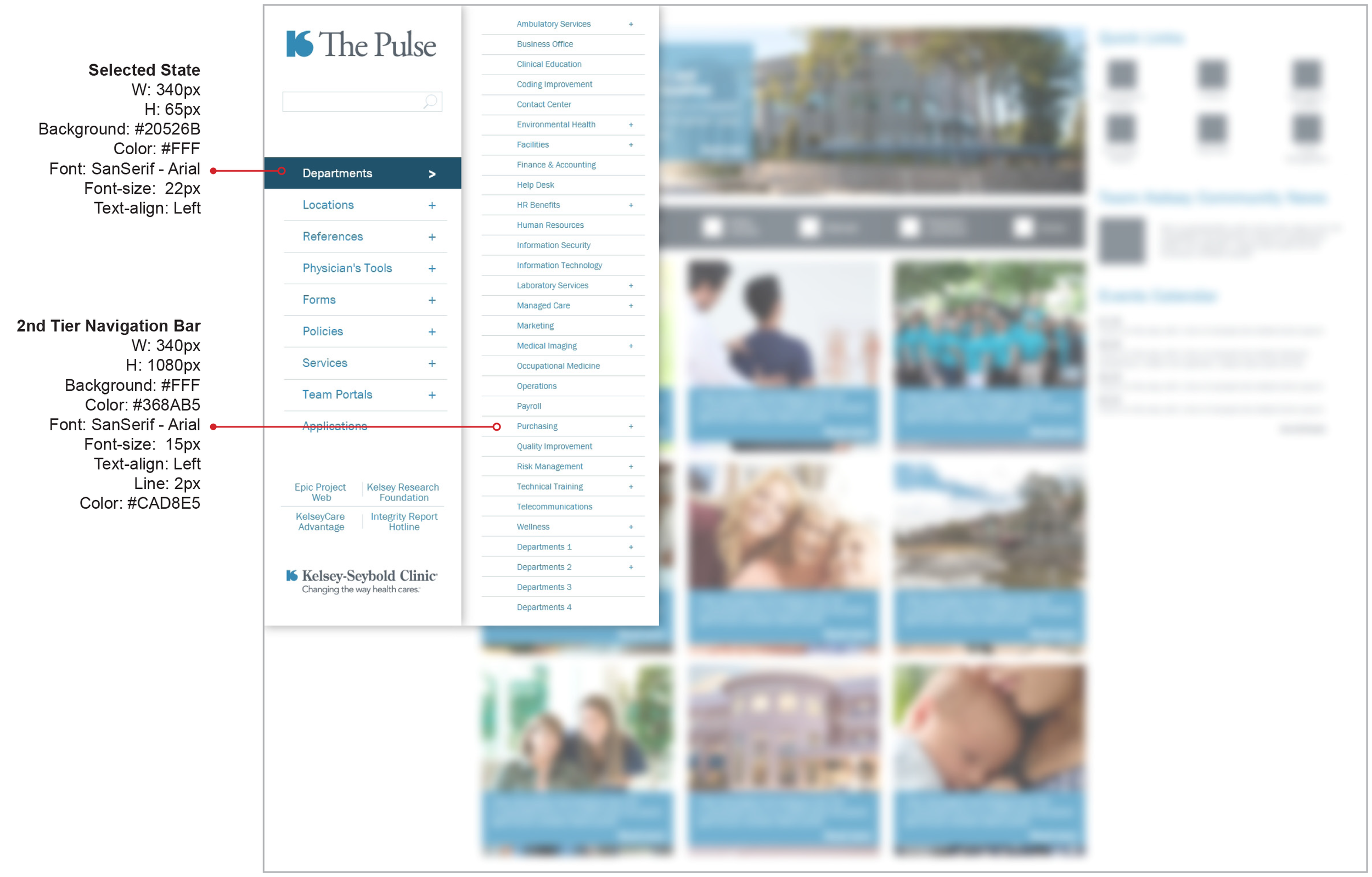
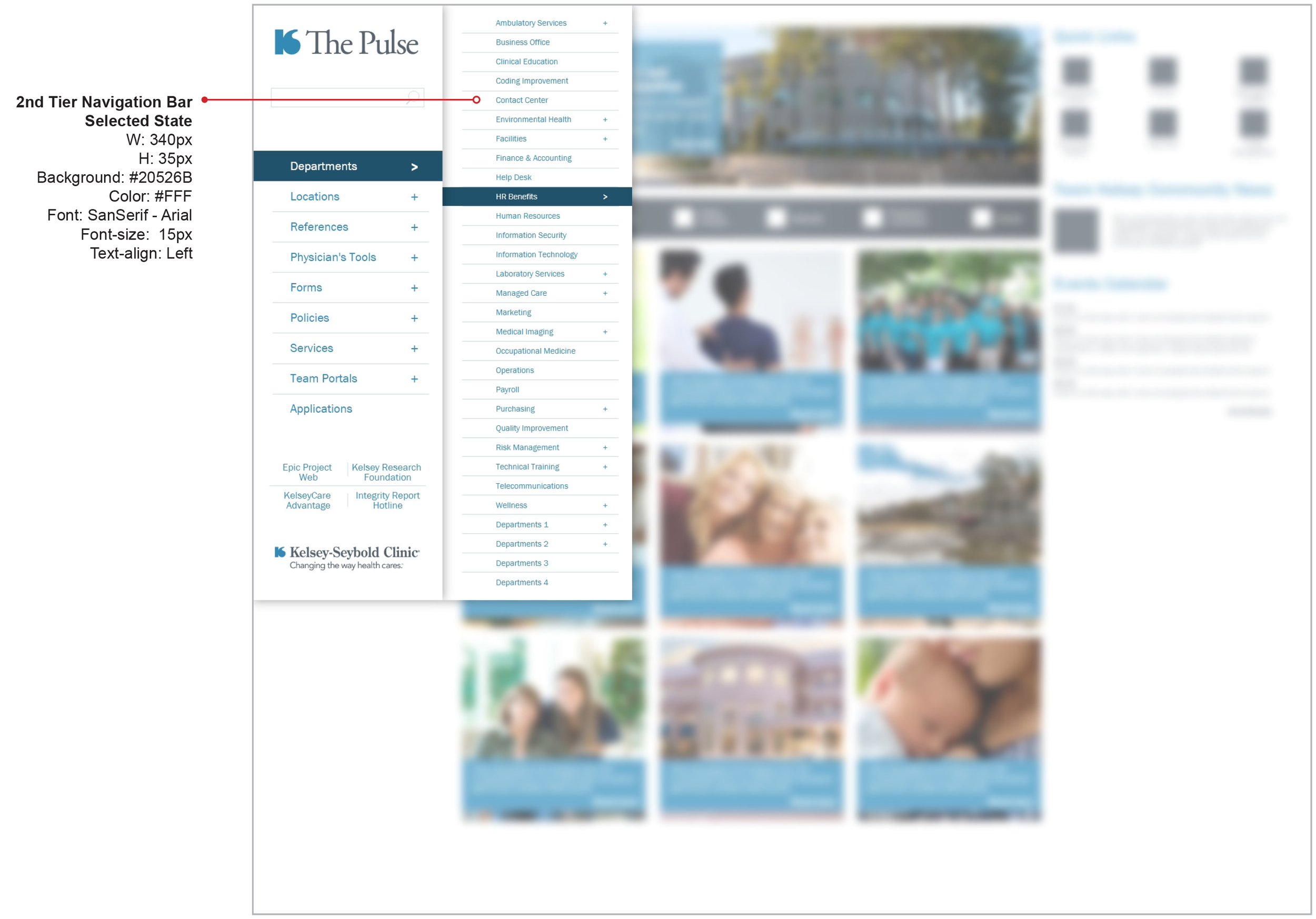
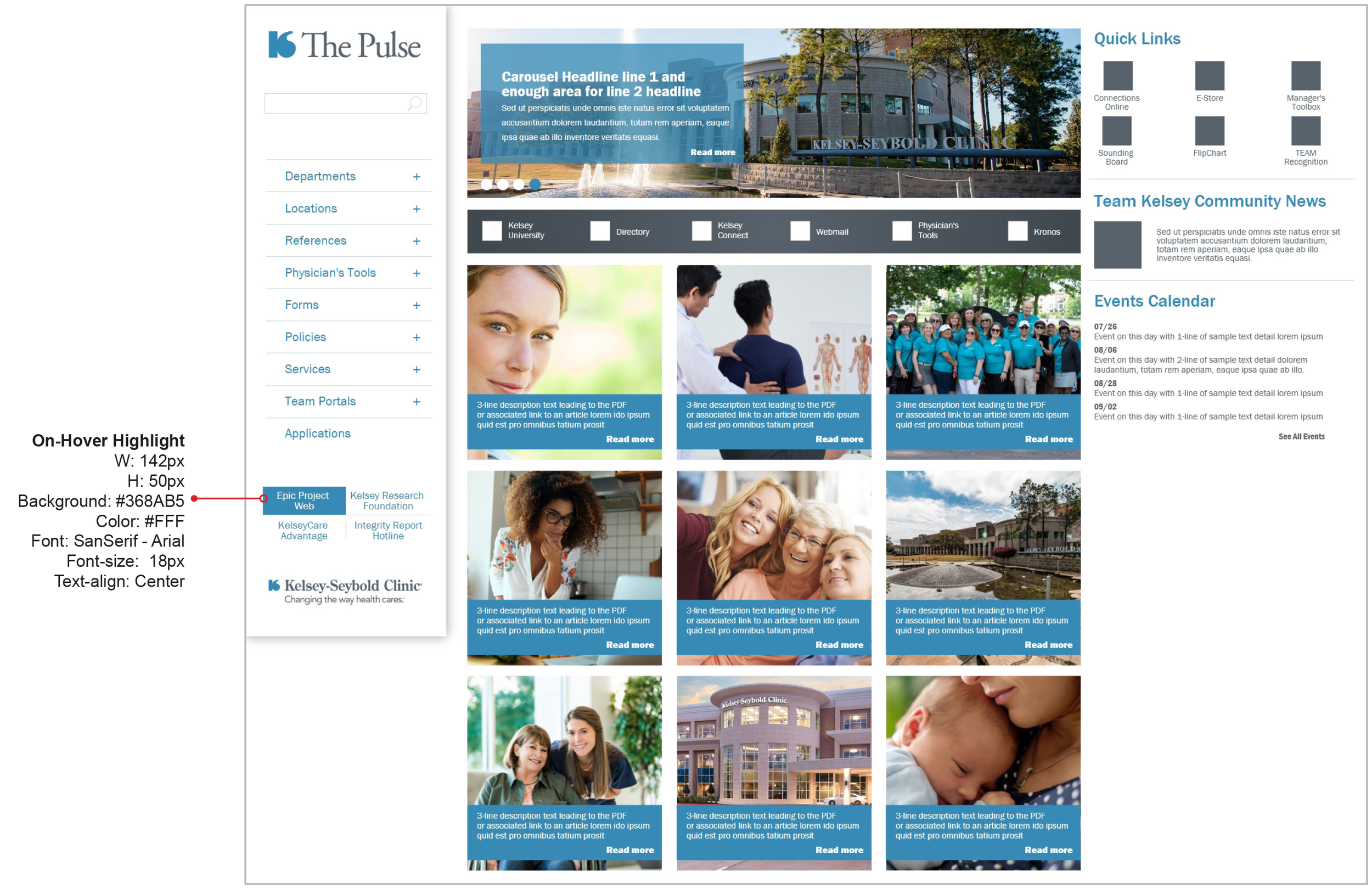
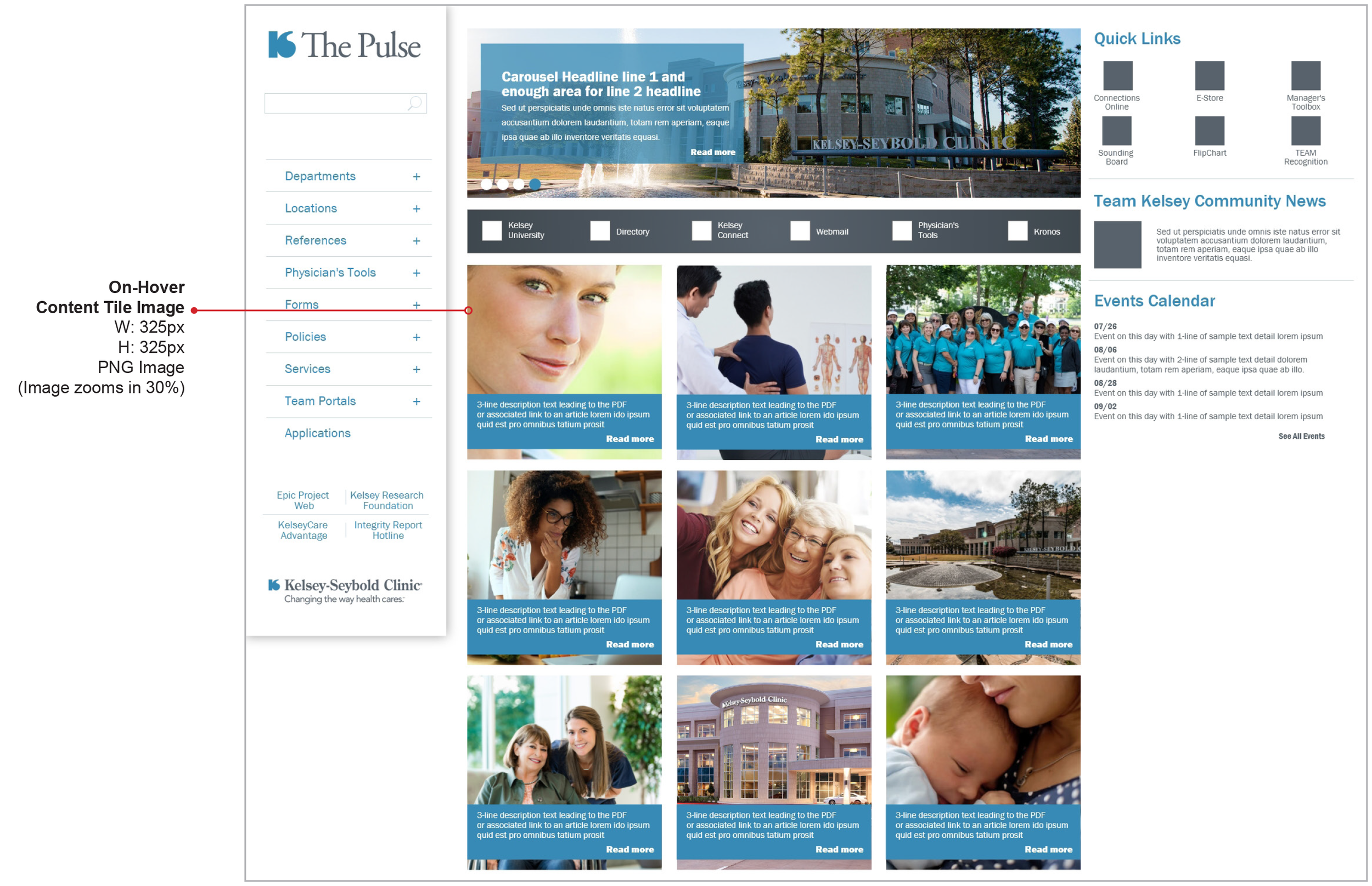
After 9 iterations and user testing rounds, the final design delivered a rotating carousel hero, side navigation with multi-tier hierarchy, custom QuickLink iconography designed specifically for this project, and medical web apps accessible above the fold. Below are the full hi-fidelity prototype screens.






Spec sheets for
every component.
Complete specification documentation was produced for the development team — covering layout grids, color tokens, typography scales, component states, spacing rules, and interaction behaviors across the full SharePoint implementation.


A healthcare intranet that finally works.
After 48 design iterations and 162 total screens built, the redesigned Pulse delivered 34% more accessible functionality than the previous version. Medical staff could access critical clinical web apps immediately above the fold — no scrolling, no hunting.
The project demonstrated that rigorous UX process — MoSCoW prioritization, iterative design, and user testing with the actual HR department — produces measurably better outcomes even within constrained technical environments like IE9-limited SharePoint.
What Was Delivered
- Complete intranet redesign serving 3,000+ staff and 480 physicians across 25 locations
- MoSCoW-facilitated requirements workshop establishing prioritized feature scope
- 9 content iterations with multiple rounds of user testing and HR stakeholder review
- Rotating carousel hero, side navigation with multi-tier hierarchy
- Custom QuickLink iconography designed specifically for this project
- Critical clinical web apps elevated to navigation bar — accessible above the fold
- 34% more functionality than the previous site, within IE9 constraints
- Full clickable Adobe XD prototype and 8-page spec sheet documentation